Friday, March 22, 2013

Matsyasana or "Fish Pose"


To be honest, I really disliked this asana for a long time. Maybe even hated…but as a wise yogi once told, “the asanas that you dislike are probably the asanas that you should be practicing more.” Despite the masochistic tone, there is truth behind the sentiment.

Matsyasana is now a pose that I practice with not only peace of mind, but also enjoyment. There is something to be said for facing your challenges head on, especially in your yoga practice.

Sanskrit: Matsyasana                                    Western Term: Fish Pose

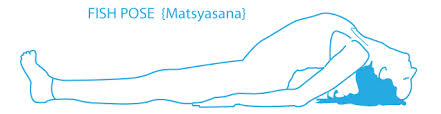
Artistic yogi fish pose drawing


Origin of Word
Matsya = fish; asana = pose

Type of Asana: supine pose


How To:
1.     Lie on your back with your knees bent. Inhale as you lift your pelvis and place your forearms on the floor and hands under your bottom/buttocks/hiney/glutes…any other ladylike word for your “butt.”
2.     Inhale pressing your forearms into the floor and lift up through the upper torso and head. As you lift, imagine someone is pulling you up from the ribs and upper torso area to lower you gently on the top of your head.
3.     Yogi’s choice: keep the knees bent or straighten your legs along the floor. If you  straighten the legs, keep pada bhanda by pressing out through the heels and spreading the toes.
4.     Stay for about 30 seconds, inhaling and exhaling calmly. As you exhale, tuck your chin and lower your head and torso down. Bend your knees into your chest and breath.   

The version of fish asana shown above is a more solar version of the asana, engaging the core with the hands and legs up in the air


Body Points:
*keep energy through the soles of the feet in pada bhanda
*keep weight dropping down through the pelvis
*optional: inhale through the nose and exhale through the mouth as you stick your tongue out in fire’s breath

Emphasized Body Parts: belly, chest, spine, shoulders, and neck

Physical Benefits: matsyasana is known as the “destroyer of all diseases;” stretches the psoas and intercostals (muscles between the ribs); stretches and stimulates the muscles of the belly and front of the neck and the organs of the belly and throat; improves posture

Mental Achievements: improve your communication

An aid for beginners: kramas or levels of a pose give us yogis with various levels options. For any given pose, there are various levels of difficulty. This krama that I offer is for beginners or those who are looking for a more lunar variation:

-if you feel a strain in your neck, either lower your chest slightly toward the floor or place a folded blanket underneath your head for padding


For Yogis looking for a Solar Variation:
-bring your legs into padmasana or lotus pose while remaining on the top of your head


Chakra: throat chakra, 5th chakra, also known as visuddha chakra. It is symbolized by a sixteen-petaled blue lotus found in the throat.
-Bija mantra or seed sound of 5th chakra asanas is “ham.” Repeat this word while in 5th chakra poses to connect with your inner truth and communication with others.

Ancient Sanskirt Proverb: “Why should men endowed with good sense speak harshly, when sweetness is within their own power and when sentences can be composed of sweet words?”


Element: sound

*Helpful for yogis with constipation, respiratory ailments, mild backache, fatigue, anxiety, and menstrual pain
**Do not do this asana if experiencing high or low blood pressure, migraine, insomnia, or serious lower-back or neck injury

Happy Spring! Upon returning from another revoluionary yoga training with my teacher, Shiva Rea, on my path to receiving my 500 hr RYT, I was reminded about the benefits of this time of year. As the days get lighter, we move towards a more solar and energized state. This is a great time to focus on evolving creatively. Enjoy the light :) I know everyone here in Portland, Maine is ready for sunshine after a snowy winter.  


Sources:


Friday, March 1, 2013

Ustrasana or "Camel Pose"


 Sanskrit: Ustrasana                                    Western Term: Camel Pose


Origin of Word
Ustra = camel             Asana= pose

Type of Asana: backbend


How To:
1.     Kneel on your knees, keeping a hips width distance between the knees (approx. 2 fists, 6 inches). Firm but don’t tighten your buttox, and imagine drawing your sits bones up in towards your torso. Press the shins and feet into the ground and come to stand on your shins.
2.     Roll your shoulder blades down your back and bring your hands (with the fingers facing up) on your lower back/sacrum area. Press your hands forward on your lower back to bring your pelvis forward as you begin to arch your upper back. You can keep your hands on your lower back or go further by dropping your hands down to your ankles or feet.
3.     Melt your heart down and push your pelvis forward. Keep your head in a neutral position or release your head to look behind you. Make sure your ribs aren’t sticking straight up toward the ceiling (which could bring pressure into the lower back). Release the front ribs and lift the front of the pelvis up towards the ribs. 
4.     Stay in camel for 30 seconds to a minute. To come out of the pose, bring your hands back to the lower back, inhale and lift the head and torso up by dropping the hip points down to the floor.
5.     Rest in child’s pose (balasana) for a few breaths as a counter pose after taking camel.


Body Points:
*keep thighs rotated inwardly slightly
*outer hips stay soft
*keep upper ribs in (not protruding towards the ceiling) and keep front of pelvis lifting towards the torso


 Emphasized Body Parts: stretches the front of the body, ankles, thighs and groins; stretches the deep hip flexor (psoas); strengthens back muscles; improves posture; stimulates the organs of the abdomen and neck

Mental Achievements: Opens heart to love and the ability to be vulernable and be loved

Therapeutic Use: respiratory ailments, mild backache, fatigue, anxiety, and menstrual discomfort

Modification:
-if ustrasana hurts your neck, do the pose against the wall. Curl your toes under and press the soles of the feet against the wall, lean back and press the top of the head against the wall.

For Advanced Yogis:
-deepen the pose by bringing the legs togetherà thighs, calves, and inner feet touching


Chakra: Anahata Chakra or 4th chakra, symbolized by a twelve-petaled-green lotus
-this chakra is found between the heart and lungs
-bija mantra or “seed sound” of 4th chakra is “yam.” Repeat this sound in camel pose to connect to your 4th chakra.

(INSERT PIC OF Solar-plexus-chakra.jpg)

Ancient Sanskirt Proverb: “It is called friendship, when seeing someone, or touching them, or hearing them, or talking to them, touches your heart. Otherwise it is just an acquaintance…”


Element: Air

*If you can’t touch your feet without compressing your lower back, you can turn your toes under and elevate your heels.

**Do not perform camel if you have high blood pressure, migraines, insomnia, or serious lower back or neck injury


Sources:

Friday, February 22, 2013

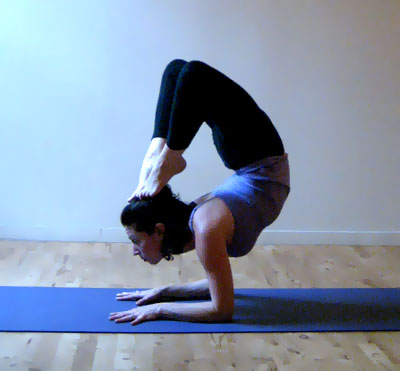
Vrschikasana or Scorpion Pose


The pose this week is a pose that I greatly admire and am working towards in my own yoga practice. I refer to yoga poses that I’m working towards as a “peak pose.” This name came about during my 200 hr yoga teacher training at New York Yoga. At that time, headstand was my peak pose. I worked on my headstand every night about three times per night. I diligently worked toward my headstand and after a week conquered it! Needless to say, I was very happy. But reaching the physical asana of a pose is not the end of your practice. We can use each pose within our yoga practice (as in each experience in our life) to continue to evolve.

So, don’t be deterred if you don’t immediately reach the physical asana of scorpion pose. As in life, it’s a process.


Sanskrit: Vrschikasana                                                Western Term: Scorpion Pose

Type of Asana: Inversion/Backbend


How To:
1.     Stand and come onto your hands and knees placing your forearms on the mat. Lengthen your arms to create a straight line between elbows, forearms, and middle fingers. Attempt to maintain parallel between the arms.
2.     Walk your feet in to your hands as close as you can towards your head. Keep your gaze between your hands, not at your feet.
3.     Lift your right leg straight up and take little hops, so that your left foot comes off the ground. Bend your left knee slightly in order to hop. Staying right here and working on your hops is a GREAT place for beginners to the pose.
4.     For those who would like to advance further in the pose, find your balance and bring your legs straight together and up towards the ceiling. Tuck your tailbone and ribs in to help stay balanced.
5.     Slowly bend your knees as your shift your chest forward slightly. If your back is very flexible, your feet will have no problem touching your head. If you’re not as bendy, you can hold Scorpion pose with the feet dangling above your head.
6.     Hold for five breaths (or as long as comfortable) before straightening your legs and lowering your feet back towards the floor.
7.     Please come down and rest in balasana or child’s pose for an equal amount of time that you’re up in Scorpion pose.


Body Points:
*Tuck your tailbone and ribs in (for stability)
*Release feet down toward your head
*Keep elbows parallel

 Emphasized Body Parts: shoulders, abs, back muscles, and improves your balance

Mental Achievements: opens your heart, helps bring humility, and move beyond your ego. Helps tune in to your intuition. 


Chakra: Ajna chakra or 6th chakra which is symbolized by a two-petaled lotus in the color indigo located near the “third eye” in the center of your forehead.

-bija mantra or "seed sound" is "OM"

Ancient Sanskrit Proverb: "Flower has scent. Sesame seeds have oil. Milk has fat. There is sweetness in sugarcane. None of the above can be seen. Just like that, we cannot see the soul in the body although it is very much there."


Element: light

Yogi Tune of the Week: "Each Time" by Steve Gold


*If you’re new to this pose, please do not attempt without a certified yoga instructor present.
**Do not attempt pose if you suffer from hip or back problems or if you have a history of heart disease, vertigo, or high blood pressure


Sources:

Friday, February 15, 2013

Virbhadrasana II or Warrior II


Warrior II is a well-known yoga pose, but it is far from simple-especially when done correctly and held for a loooooong time. I often like to help my students find their lower body (in an open pelvic position) before focusing on upper body twisting and bringing your drishti (gaze) over the middle finger of the front hand. A “gem” of knowledge that I received from a great yoga teacher was being told to find my “gentle warrior” in Warrior II. Believing that yoga is the language of opposites, I find a great deal of depth to her words. Softening your face and mind help bring ease and efficiency to your Warrior II.
Remember: don’t get mad, get glad and breath.

Sanskrit: Virbhadrasana II                                    Western Term: Warrior II

Origin of Word the name for this pose derives from an incarnation of Shiva, a fierce warrior, with a thousand heads, a thousand eyes, a thousand feet, wielding a thousand clubs, and wearing a tiger’s skin. Step back, Beyonce, that’s fierce.

Type of Asana: standing pose


How To:
1.     Stand in tadasana (mountain pose). As you exhale, jump your feet about the distance about a full leg length long (this varies depending the size of your leg and flexibility). Raise your arms up, lengthening the arms and keeping them parallel to the ground. Feel energy out of both fingertips, without tensing the fingers and keeping your shoulder blades down your back.
2.     Turn your right foot out and keep the left foot out at 90 degrees. Line both heels up. Firm both thighs.
3.     Exhale to bend your right knee over your right ankle. Press the left sole of the foot down on the floor, spreading the toes and feeling length through the back leg. Keep the core up and in. Inhale deeply through the nose and exhale as you bend a little deeper in the front right knee to move further into the pose.
4.     Keeping your pelvis open, turn to gaze over the right middle finger.
5.     Stay for about 30 seconds to a minute (5 to 10 deep breaths) before inhaling to come up. Make sure you do both sides!


Body Points:
*press the tailbone slightly toward the pubis
*keep the sides of the torso equally long and shoulders over the pelvis
*press down on the outer heel of the back foot


 Emphasized Body Parts: legs, ankles, groins, chest, lungs, and shoulders; stimulates abdominal organs and increases stamina. Relieves backaches (esp through 2nd trimester pregnancy).

Mental Achievements: radiance, strength, and confidence. Encourages you to turn your energy into action.

An aid for beginners: kramas or levels of a pose give us yogis with various levels options. For any given pose, there are various levels of difficulty. This krama that I offer is for beginners to the pose:
-when you bend the right knee, bend it quickly using a deep exhale, and aim the right knee toward the pinky-toe side of the right foot

For Advanced Yogis: increase the length and strength of your arms by turning the palms and inner elbows up toward the ceiling, keeping the shoulder blades dropping down your back. Keep the rotation of the arms and turn the palms of the wrist to face down toward the floor again.


Chakra: 3rd chakra, Manipura chakra, it is found between your navel and breast bone and symbolized by a 10-petaled yellow lotus.

Transform energy into action by connecting to your 3rd chakra with poses like warrior II. Repeat the seed sound or bija mantra of “ram” while in your 3rd chakra pose to ignite the fire within.

Ancient Sanskirt Proverb: “Person with enthusiasm is a powerful one. There is no power equal to will power. For a person with enthusiasm and will power there is nothing that is difficult.”


Element: Fire

*Therapeutic for practitioners with sciatica, carpal tunnel syndrome, infertility, and osteoporosis

**Do not do if experiencing diarrhea, high blood pressure, neck problems (don’t turn head to the front, continue to look straight ahead)


Yogi Tune of the Week: “Om Namah Shivaya” by Donna De Lory

Pink for Spring!

Cute criss-cross straps


Fav New Yogi Accessory: Lululemon’s Free To Be Tank. Only downside is there are too many cute colors to choose from. This one was my favorite because it makes me think of spring! Bring on the sun!

HAPPY WEEKEND! 


Sources:


Friday, February 8, 2013

Hanumanasana or Split Pose


Sanskrit: Hanumanasana                                    Western Term: Split Pose


Origin of Word The pose’s name originated from the story of the hindu monkey God, Hanuman, leaping (in the shape of a split) to his love, the hindu Goddess, Lanka

“Hanumanasana” translates to “Monkey Pose.”

Type of Asana: Seated Pose


How To:
1.     Bring both hands down on the floor on either side of you and shift your right foot in front of the right knee (this okay on the knees because both hands are down). Drop your weight down through your pelvis, leaning slightly more into the front leg. This helps stretch the back left hip flexor.
2.     Inhale as you re-square your hips by lifting your front right leg back. Exhale as you lower down into YOUR version of a split. Wiggle your front right leg forward more, wiggle your back left leg further back.
3.     Pull your right hip back and left hip forward to ensure both hips are staying squared in the pose. Keep your front foot flexed and walk your hands back by your hips.
4.     Stay for 5-7 breaths. Be careful getting out of the pose, lifting up out of half split stretch or slowly bending both knees before coming into downward dog.
5.     Make sure you do both sides for an even amount of time, even if one side is not as open as the other! It’s okay if your legs flexibility isn’t perfectly balanced. Most peoples’ flexibility from side to side is not equal :)


Body Points:
*Keep front foot flexed
*Pull front leg back and back leg to the front to keep both hips squared
*Drop the weight of your hips down toward the ground

Emphasized Body Parts: hamstrings, hip flexors, abdomen, groins, chest, shoulders

Mental Achievements: mental maturity and surrender


An aid for beginners: kramas or levels of a pose give us yogis with various levels options. For any given pose, there are various levels of difficulty. This krama that I offer is for beginners to the pose:

-Ardha Hanumanasana or “Half Split” is a great variation for full hanumanasana or split. It focuses on stretching one leg, rather than both. It hits the back of the leg, hamstring area. To get into the pose, start kneeling, start by bringing your right leg in front of the left. Make sure you keep your left knee aligned under your left hip, and keep your right leg lengthened and straight in front of you. Flex the front foot strongly. Inhale into a flat back and exhale as you fold bringing your forehead toward your right shin. Stay for about 5 breaths.

-Make sure you do both sides for an equal amount of time.

-You can also use blocks to help you move down towards your full split pose.


For Advanced Yogis:
-Upon getting into your split pose, lift your arms up and bring hands together in a prayer. Drop your shoulder blades down your back. Bring your gaze up towards the sky and start to come into a backbend in your upper back while in your split pose. Stay for 5-7 breaths.


Chakra: 1st chakra, Muladhara chakra symbolized by a red four-petaled lotus. It is located at the base of your spine. Your first chakra helps you build your life upon a solid foundation.
-bija mantra or “seed sound” for 1st chakra poses like hanumanasana is “lam.” Repeat this word when in a first chakra pose and unlock the secrets of the earth.

Ancient Sanskirt Proverb: “Regular exercise gives you good health, longevity, strength, and happiness. Health is the biggest wealth. It is the key to every success.”


Element: Earth

Yogi Tune of the Week: "Rock on Hanuman" by MC Yogi


*Very therapeutic for yogis with sciatica
**Do not do if you have groin or hamstring injuries


Sources:


Friday, February 1, 2013

Devotional or Humble Warrior


There are days when you walk into class and people are roaring to go. That energy is awesome! But sometimes the high amount of energy can stop us from listening to what our body needs and focus on what we think a pose should look like, or going further in a pose than we should go (aka when injuries happen). This week’s pose, devotional warrior, is what grounds our, at times, overly zealous energy. It is a humbling pose that encourages us to bow to ourselves and surrender to our intuition in body and breath.

Sanskrit: This pose does not have a Sanskrit name because it came into existence recently and is a krama or precursor in levels before getting to poses like “lizard” or “yogi foot behind the head”

Western Term: Devotional Warrior or Humble Warrior

Origin of Word a humbling pose where one bows their head down to the ground

Type of Asana: Standing Pose


How To:
1.     Start in Warrior I (check 1.25.13’s blog for more info on how to do Warrior I).  Exhale as you reach your arms down by your sides and interlace your fingers behind your lower back.
2.     Inhale to roll your shoulder blades down your back as you pull your interlaced fingers behind you and come into a slight backbend.
3.     Exhale to fold brining the top of your head down towards the floor. Keep your shoulder blades on your back and reach your arms forward. Keep a deep bend in the front knee.
4.     Stay for 5-7 breaths before coming up and doing opposite side.


Body Points:
*keep the palms of the interlaced fingers together
*bend the front knee deeper, trying to bring the top of your head closer to the floor while keeping your back leg lengthening
*keep the shoulder blades on your back

 Emphasized Body Parts: opens the hips, opens stretches & strengthens the shoulders, strengthens and limber the legs


Mental Achievements: encourages focus and reverence


Chakra: 3rd chakra, Manipura chakra, symbolized by a 10-petaled yellow lotus. Located between the navel and breast bone. The center where you turn energy into action.
-“seed sound” or bija mantra: “ram” to ignite the fire within while in 3rd chakra poses

Ancient Sanskirt Proverb: “Person with enthusiasm is a powerful one. There is no power equal to will power. For a person with enthusiasm and will power there is nothing that is difficult.”


Element: Fire

Have a good weekend!


Sources:


Friday, January 25, 2013

Virbhadrasana 1 or "Warrior 1"


Sometimes people overlook the common poses like warrior I. Warrior poses are harder than they look. Yes, warrior I is a common pose that is incorporated into most yoga classes one drops into today. But don’t be deceived! There is a strength and softness integral in warrior I. With practice you can find ease and efficiency in this pose.

Sanskrit: Virbhadrasana I                                    Western Term: Warrior One


Origin of Word
Yes, yogis are about non-violence but in the Bhagavad-Gita, Krishna and Arjuna are well-known revered warriors

Type of Asana: Standing Pose


How To:
1.     Stand in tadasana (mountain pose).
2.     Jump your feet about a full leg length apart.
3.     Turn your right toes forward and the back left foot at a 45 degree angel. Lift your arms up and bring hands into a prayer position with arms long reaching back towards your ears.
4.     Bend front right knee so that the knee stays over the ankle and lengthen through back leg. Bring your gaze up toward the sky in between the hands, opening your heart.
5.     Stay for 5-7 breaths.


Body Points:
*keep your knee over your ankle
*keep hips squared off to the front of the room; lengthen through the back leg
*drop your shoulder blades down the back


 Emphasized Body Parts: chest, lungs, shoulders, neck, belly, groins (psoas), shoulders, muscles of back, calves, and ankles
This pose is therapeutic for sciatica.

An aid for beginners: kramas or levels of a pose give us yogis with various levels options. For any given pose, there are various levels of difficulty. This krama that I offer is for beginners to the pose:

-it can be hard to keep the hips squared with your back foot on the ground. Beginners may keep back heel raised, in order to get used to the hips squared feeling before moving toward dropping their heal down to the ground.


Chakra: Root chakra, Muladhara, symbolized by a red four-petaled lotus. Use your 1st chakra poses to build a strong foundation.

Seed sound or bija mantra: “lam” repeat while in 1st chakra pose to unlock the secrets of the earth.

Ancient Sanskirt Proverb: “Regular exercise gives you good health, longevity, strength, and happiness. Health is the biggest wealth. It is the key to every success.”

Element: earth

*Do not do if:
-high blood pressure
-heart problems
-shoulder problems keep hands apart; neck problems keep gaze forward rather than up

Weekly Yoga Tune:


Have a great weekend!


Sources: